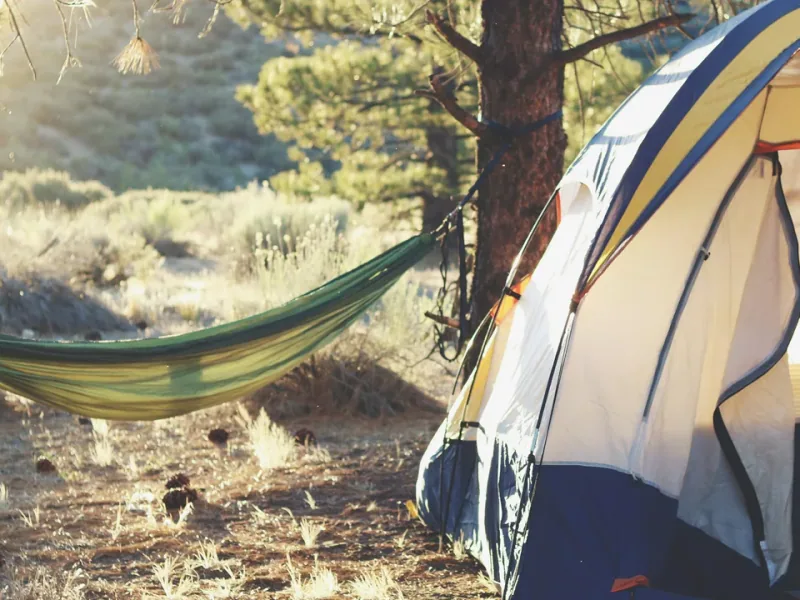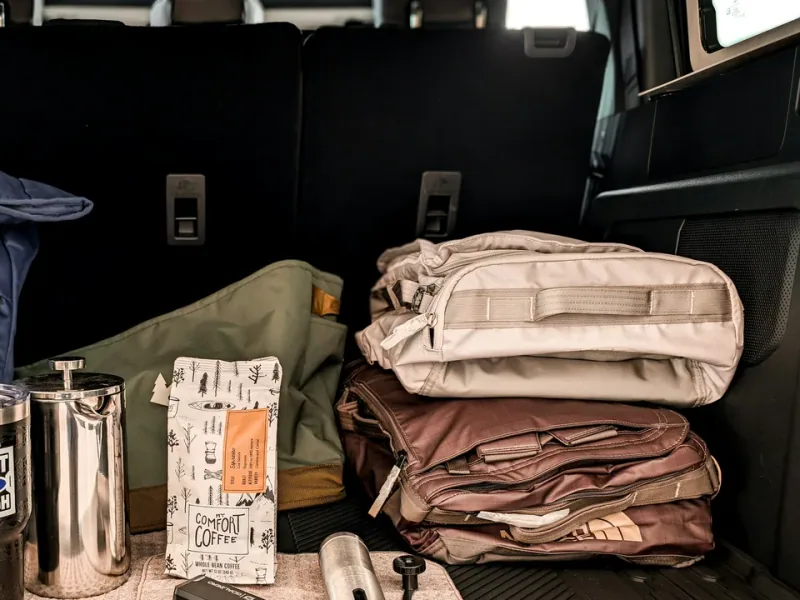
The photograph is persuasive. A tent under the pines, coffee on a rock and no neighboring campsite to be seen. The caption says free camping. What it leaves out is the two hours of map reading, the closed forest road and the small matter of figuring out whether the land actually allows you to sleep there.
That's the bargain with dispersed camping. You skip the reservation and the fee at many locations, but you take over the campground host's job. You need to find a legal site, reach it without wrecking the road or your car and bring everything the campground would normally provide.
The process is simpler than it sounds. Pick a specific national forest or Bureau of Land Management area, check that area's camping rules, use its official maps to choose a legal route, identify several already-used sites and arrive with daylight and a backup plan. The view comes last. Permission comes first.
First, know whose land you're looking at
Dispersed camping means camping outside a developed campground, usually on public land, without a reserved campsite or the usual facilities. Many national forests and BLM areas allow it, often free of charge. That doesn't mean every patch of green on your map is available.
A national forest can contain private inholdings, wilderness areas, seasonal closures and roads closed to vehicles. BLM land can include wildlife protections, designated camping zones or areas where camping is prohibited. National parks generally have their own, often much tighter, rules for overnight use. State parks and city lands are different again.
Before you look for a pretty pullout, find the land manager. If you don't know who makes the rules, you don't yet know whether it's a campsite.
For the difference between these camping formats, read Campgrounds, Walk-In Sites, and Dispersed Camping: What's the Difference?. This guide starts where that one ends: with finding somewhere to go.
How to find dispersed camping in five steps
1. Choose the forest or BLM field office, not a random pin
Begin with a destination you can reach comfortably before dark. Search for the name of a national forest or BLM field office and its dispersed camping guidance. Read the camping page, alerts and current orders. Pay attention to areas excluded from camping, reservation requirements, stay limits and whether your intended access road is seasonal.
This part feels bureaucratic because it is. You are borrowing land with rules, not buying a campsite from an app.
If the official page is unclear, call the ranger district or field office. Ask a narrow question: “Is dispersed camping allowed off this numbered road right now, and are there designated sites or parking limits?” That's more useful than “Where's the best free camping?” The person answering may not want to hand a fragile little meadow to the next hundred people on social media.
2. Put the right map under your route
For national forest vehicle access, look for the Motor Vehicle Use Map, usually shortened to MVUM. It identifies roads and trails designated for particular types of motorized travel and may show seasons and specific dispersed-camping corridors. It is a legal travel map, not a catalog of pretty campsites.
For BLM camping, start with the agency's land and recreation maps, then the relevant field office's travel-management information. A land-ownership overlay is useful for recognizing BLM parcels. It does not, by itself, give you permission to leave a road or camp on every parcel.
Satellite imagery and camping apps come afterward. They can help you spot an older pullout, a wide turn or a cluster of disturbed ground. A user-submitted pin tells you someone went there once. It cannot tell you whether they were allowed to, whether the road is still open or whether the place has been closed since.
3. Pick three possible spots along one legal road
Choose a road your vehicle can handle, then identify a first-choice site, a second choice nearby and a fallback outside the dispersed area. Favor existing, visibly used sites rather than an untouched patch of vegetation. Save the road number, coordinates and route to each option for offline use.
Check the approach, too. A smooth-looking line on a phone map can become deep ruts, washboard, mud or a locked gate. Wet clay can turn an easy road into a recovery bill. A rental car's contract may restrict unpaved roads even where driving is otherwise legal.
Never treat “the map says there's a road” as a guarantee that the road is passable today. If you're unsure, stop somewhere safe and turn around before the track makes that decision for you.
4. Check the current rules on the day you leave
Stay limits are often around fourteen days on BLM or national forest land, but the length, counting period and required move distance vary by jurisdiction. Some areas require camping only in designated spots. Some prohibit camping near water, trailheads, developed recreation sites or particular roads. A common low-impact practice is to camp at least 200 feet from lakes and streams, but the local requirement takes priority.
Fire rules deserve their own check. A map that shows legal camping doesn't authorize a campfire. Restrictions may ban wood fires, charcoal or certain stoves, and permits may be required even when a gas stove is allowed. In California, for example, fire-permit and seasonal orders can apply to dispersed trips. Don't use yesterday's fire information as permission for tonight.
If the managing agency's instructions and an app disagree, follow the managing agency.
5. Arrive with enough daylight to say no
A reservation gives you a number. Dispersed camping gives you a search. Start early enough to inspect your first site, find another if it's occupied and still make dinner before dark.
When you find an established spot, park only where vehicle travel and parking are permitted. Make sure you aren't blocking a road, gate, trail or emergency access. Walk the ground before unloading. Look for dead branches overhead, drainage channels below, signs of recent flooding, unsafe cliffs and evidence that someone has claimed the site as private property.
The best site isn't necessarily the one with the grandest view. It's the one you can use without damaging anything or waking up with water under your sleeping bag.
What a legal free campsite looks like
There is no universal sign. In some places, a legal site is an obvious cleared patch beside a designated forest road. In others, camping is restricted to marked spaces, even though the area has no developed campground. Some land managers require you to park on a designated route and carry your gear in.
A good candidate has established disturbed ground, durable access, room for the tent without cutting vegetation and a place to keep food secure. A fire ring is not proof of legality. Neither is a stack of rocks, an old tire track or the fact that someone left beer cans behind. People do illegal things outdoors with astonishing confidence.
Use an existing site when permitted, but don't enlarge it. Don't create a new vehicle track to get closer to the tent. And don't dig a drainage trench around your shelter. You're spending the night, not landscaping.
The packing list changes when the campground disappears
At a developed campground, forgetting a jug of water may mean a walk to the spigot. On dispersed land, the nearest reliable water may be miles away or seasonal. Plan as though no facilities will exist unless the agency specifically says otherwise.
| What the campground usually supplies | What you may need to supply |
|---|---|
| Drinking-water tap | Enough water for drinking, cooking and washing, plus a reserve; treatment if you plan to use natural water |
| Toilet | A legal human-waste plan, including a trowel where catholes are permitted or a pack-out toilet system where required |
| Trash service | Secure bags or containers for every scrap, including food waste |
| Marked parking and site | Offline land and road maps, a suitable vehicle and backup site |
| Food locker in some areas | A bear-resistant canister or other food-storage method required locally |
| Host or nearby help | A check-in plan with someone at home and realistic self-rescue supplies |
Add weather layers, a headlamp, first-aid supplies, a charged phone and a power bank. If your route is remote enough that help cannot be reached by phone, consider a satellite communicator and learn how it works before you need it.
For a beginner's first night, choose a road close enough to pavement that leaving is still easy. You can graduate to farther-away places once you know how your gear and vehicle behave.
Bathrooms, food and fire are where the real work happens
A free campsite doesn't make its waste somebody else's problem. Human-waste rules differ by landscape. In some forests, properly placed catholes are permitted; in deserts, popular corridors and sensitive areas, you may be required to pack everything out. Toilet paper should be packed out, and washing or dumping waste near water is not acceptable. Check the local requirements before the trip, not when the need becomes urgent.
Store food, trash, toiletries and other scented items according to the agency's wildlife rules. A locked car is not a universal substitute for an approved bear canister or food locker. Never sleep with food just because the nearest bear sighting was a long time ago. Smaller animals are quite capable of destroying a trip too.
Treat campfires as optional. If a fire is allowed, use only legal locations and follow the specific restrictions. Don't build a new fire ring because the old one has a poor view. And if fires are prohibited, dinner from a permitted stove or a cold meal is still dinner. The stars will survive without your contribution to the smoke.
Three mistakes that turn free camping into an expensive night
The first is trusting a single app pin. It sends you to a road that's closed, a spot that belongs to someone else or a campsite that was never legal. Official maps and current rules are slower to consult but much better company.
The second is arriving at dusk with one candidate and no alternative. On popular weekends, the obvious places go early. Make your plan around finding an acceptable campsite, not one magical GPS coordinate.
The third is bringing campground expectations into an undeveloped place. No toilet, no cell signal, no water, no host and no guaranteed flat tent pad. If that sounds more stressful than liberating, use a developed campground for another trip. There's no medal for skipping a bathroom.
A first dispersed trip that actually sounds fun
Choose one national forest district or BLM area, one legal access road and two or three established candidate sites. Confirm the rules, download the maps, pack the missing infrastructure and get there with a few hours of light. Eat something simple. Keep the campsite small. Leave no trash and no new fire scar.
When you drive away the next morning, the place should look almost exactly as it did when you arrived. That's the pleasant contradiction at the center of dispersed camping. The more freedom you get, the less evidence you should leave behind.
Keep reading Campgrounds, Walk-In Sites, and Dispersed Camping: What's the Difference?, Going to the Bathroom Outdoors and Where to Keep Food, Toiletries, and Trash at Night.
Sources and further reading
Image credits
Lead image: Original Camp Newb illustration.