A tent stores the day's heat with impressive loyalty. By sunset the air may be cooling while the floor, mattress, and still fabric keep giving warmth back. Comfort starts before bedtime: with where the tent sits, which way air can move, and how much insulation is actually above and below you.
The aim is not to make nylon air-conditioned. It is to avoid adding heat the night does not require, keep ventilation compatible with the forecast, and preserve a cooler place to recover if the temperature remains unsafe.
Choose tomorrow's shade, not just today's view
Use the designated pad and look for shade that remains through late afternoon and early morning. A site shaded at 9 a.m. may sit in direct sun for the four hours before bed. Notice exposed rock, dark pavement, wind blocks, and low hollows where air barely moves.
Orient doors or large mesh panels toward the expected breeze when that also fits the site and the tent maker's guidance. Keep enough distance from brush and hazards, and do not move into vegetation to chase airflow. In hot, storm-prone weather, wind direction can change quickly; stake and guy the tent as a weather shelter, not as an open beach cabana.
Where the site and rules allow it, suspend a light-colored or reflective tarp above the tent with a generous air gap and independent anchors; never lay it directly on the fly or block designed vents. It reduces solar loading only when it is secure enough for the wind and comes down before a storm exceeds the setup.
Use the fly as designed
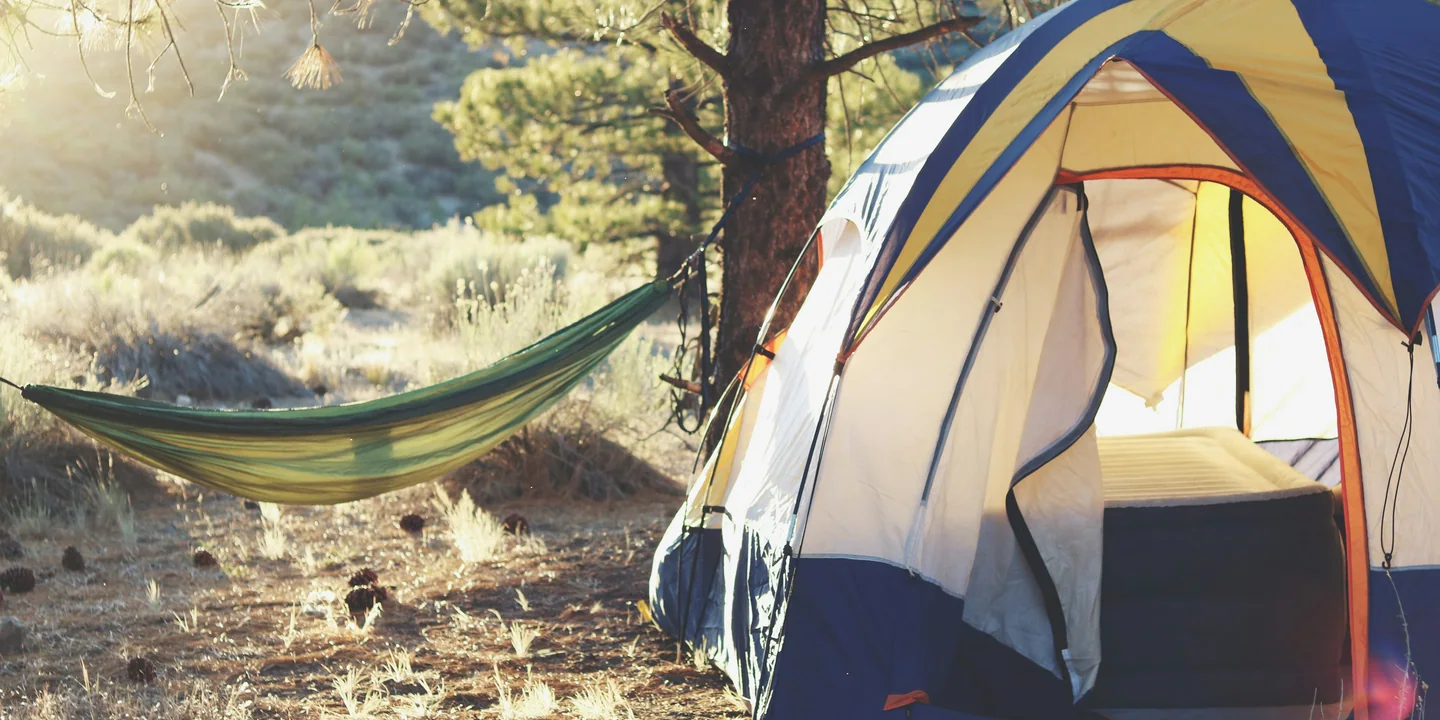
If the forecast, privacy, and tent design allow a mesh-inner setup without the fly, it releases the most heat. Keep the fly close enough to deploy before weather arrives. If the fly stays on, open its vents fully, roll permitted panels back, and tension it so air can move between fly and inner wall.
Do not remove a fly when rain, heavy dew, wind, or falling debris makes it the working part of the shelter. Open opposing doors only when insects, privacy, and site rules allow. Mesh must remain zipped where mosquitoes are the alternative ventilation system.
A hammock with a bug net sized to the hammock, trees identified for hammock use, and straps that meet the posted width rule, a bug bivy, or cowboy camping can release more heat than a tent where site rules, insects, rain, wildlife, and privacy permit. These are different shelter systems, not an invitation to remove required weather protection.
Let the bed get smaller
The sleeping pad still provides cushioning, but a heavily insulated mattress can feel warm. Use the pad you have rather than sleeping directly on ground that may be damp, abrasive, or surprisingly cold before dawn. Start with an empty sleeping bag or quilt beside you and a light sheet or liner over you. Add insulation later instead of beginning inside it.
Wear loose, dry sleep clothing. Change out of damp hiking clothes and keep tomorrow's outfit out of the bed. A small battery fan can move air in a car-camping tent, but place it where hair, fabric, and fingers cannot reach the blades, and do not treat it as the plan for dangerous heat.
Cool the person before the tent
Finish strenuous work earlier, drink regularly, eat, and spend the last part of the evening in the coolest open public place. A cool damp cloth on the neck and face is more useful than spraying the tent interior. Keep drinking water reachable overnight without creating a spill beside electronics or bedding.
Make one bedtime pass while it is still light: open the vents, move the warm layer within reach instead of wearing it, place water where it cannot tip, and clear fabric away from any fan. That small reset avoids doing the same work after the tent has become dark and stuffy.
Alcohol does not improve heat management or sleep quality. If anyone feels faint, weak, confused, nauseated, or unusually unwell, stop activity and move to a cooler place. A vehicle or building with air conditioning can be the correct campsite decision.
Evaporation cools well in dry air but less effectively as humidity rises. A damp cloth and fan may feel practical in a dry climate; in humid conditions, prioritize shade, airflow, hydration, and access to an air-conditioned refuge. Do not judge risk only by whether sweat is visible.
Know when the forecast changes the trip
Read the overnight low, humidity, heat alerts, and the temperature during setup—not only the daytime high. A campground without shade or a reliable cooler refuge may be the wrong destination during an extreme heat event. Moving the date or choosing higher, cooler ground is a planning choice, not a failed camping skill.
In the morning, open the shelter before the sun reaches it, dry condensation, and pack before the fabric reheats. The best hot-night trick is still a site and schedule that never ask the tent to defeat the weather alone.
Read the current heat alert and overnight heat index for the actual campground. If the group cannot cool down, if symptoms worsen, or if confusion, fainting, or hot skin develops, call emergency services and begin rapid cooling. No tent-ventilation trick makes dangerous heat safe.
Sources and further reading
Image credits
Lead image: Laura Pluth / Unsplash · Unsplash License.