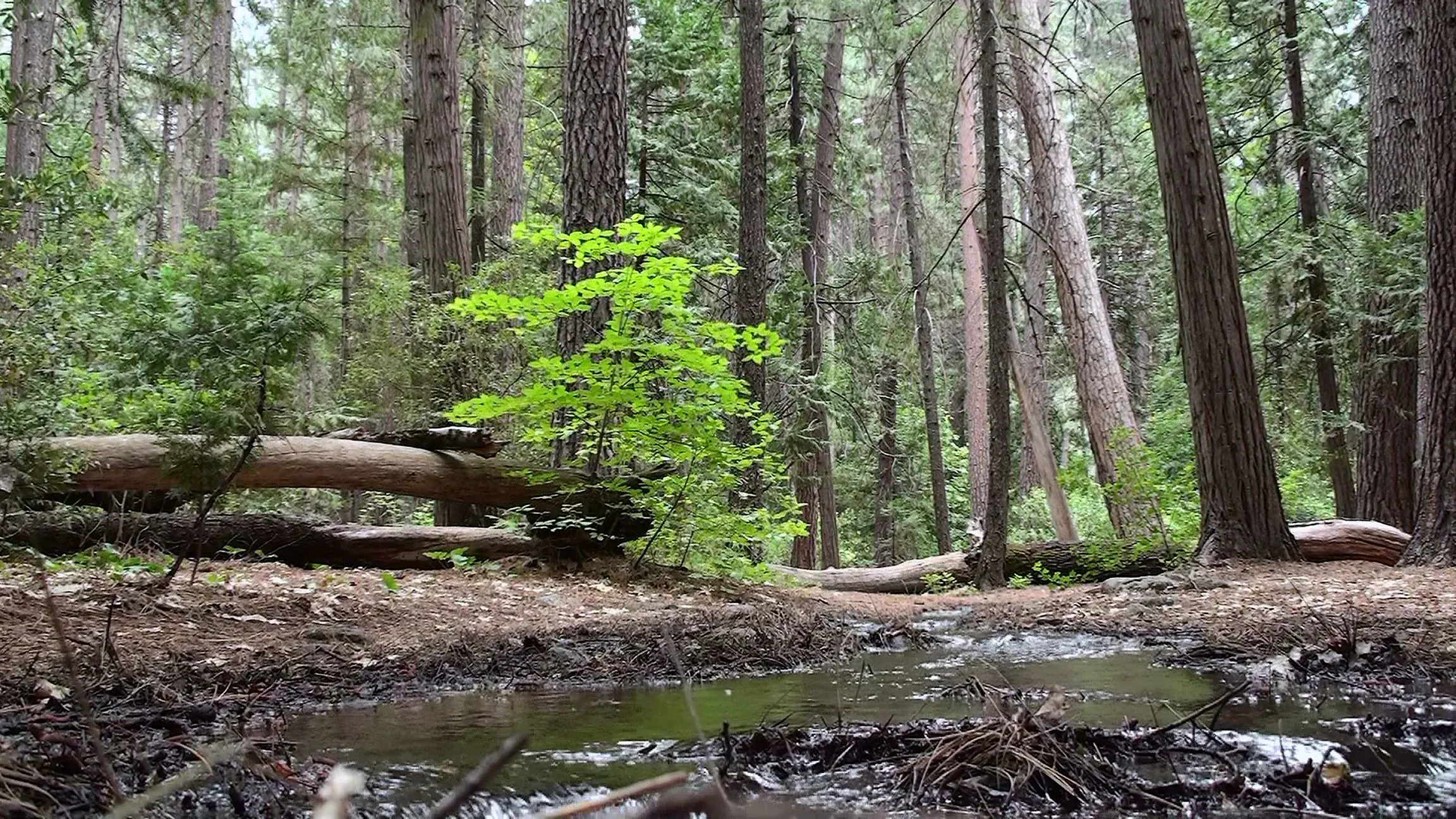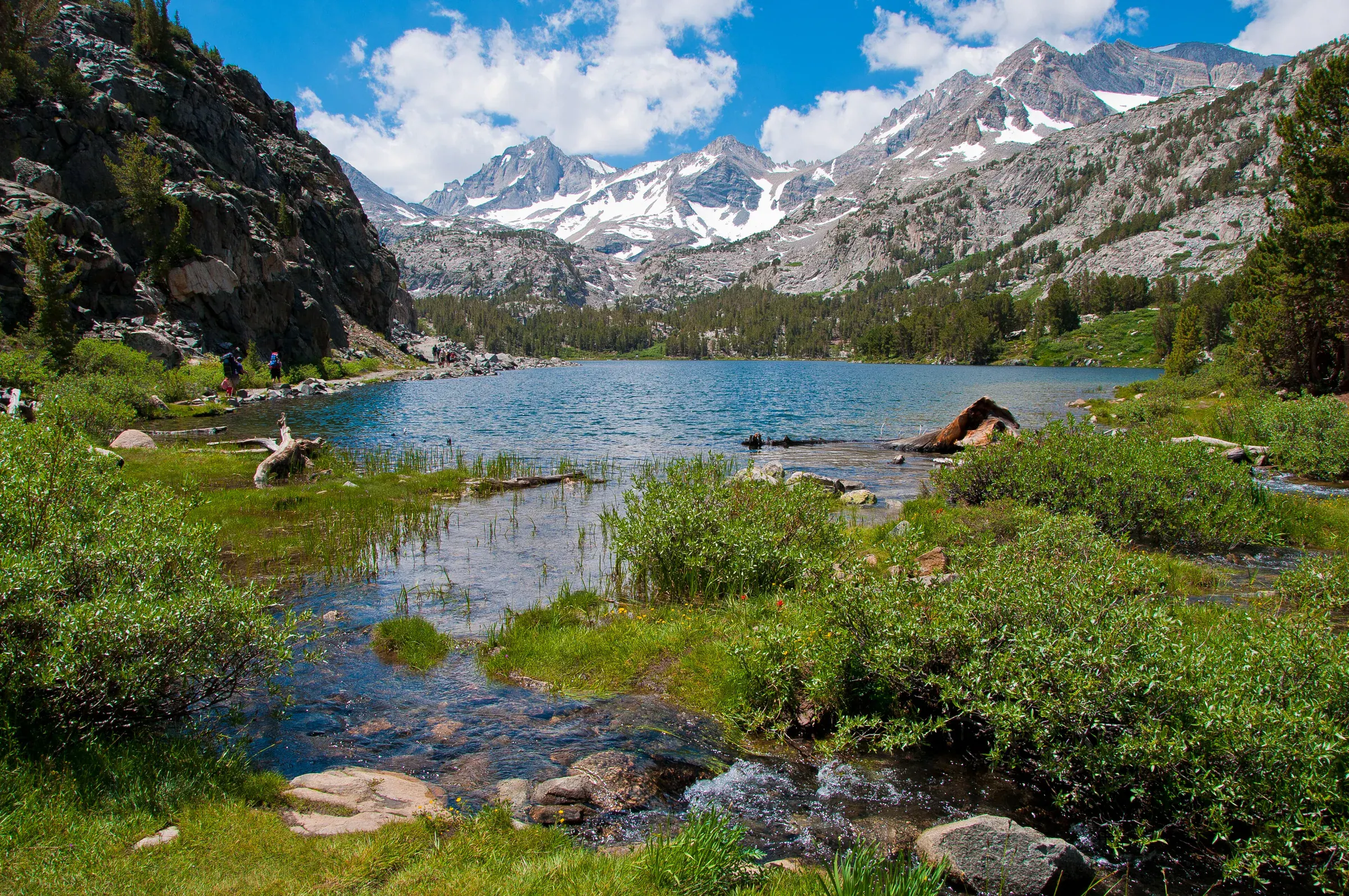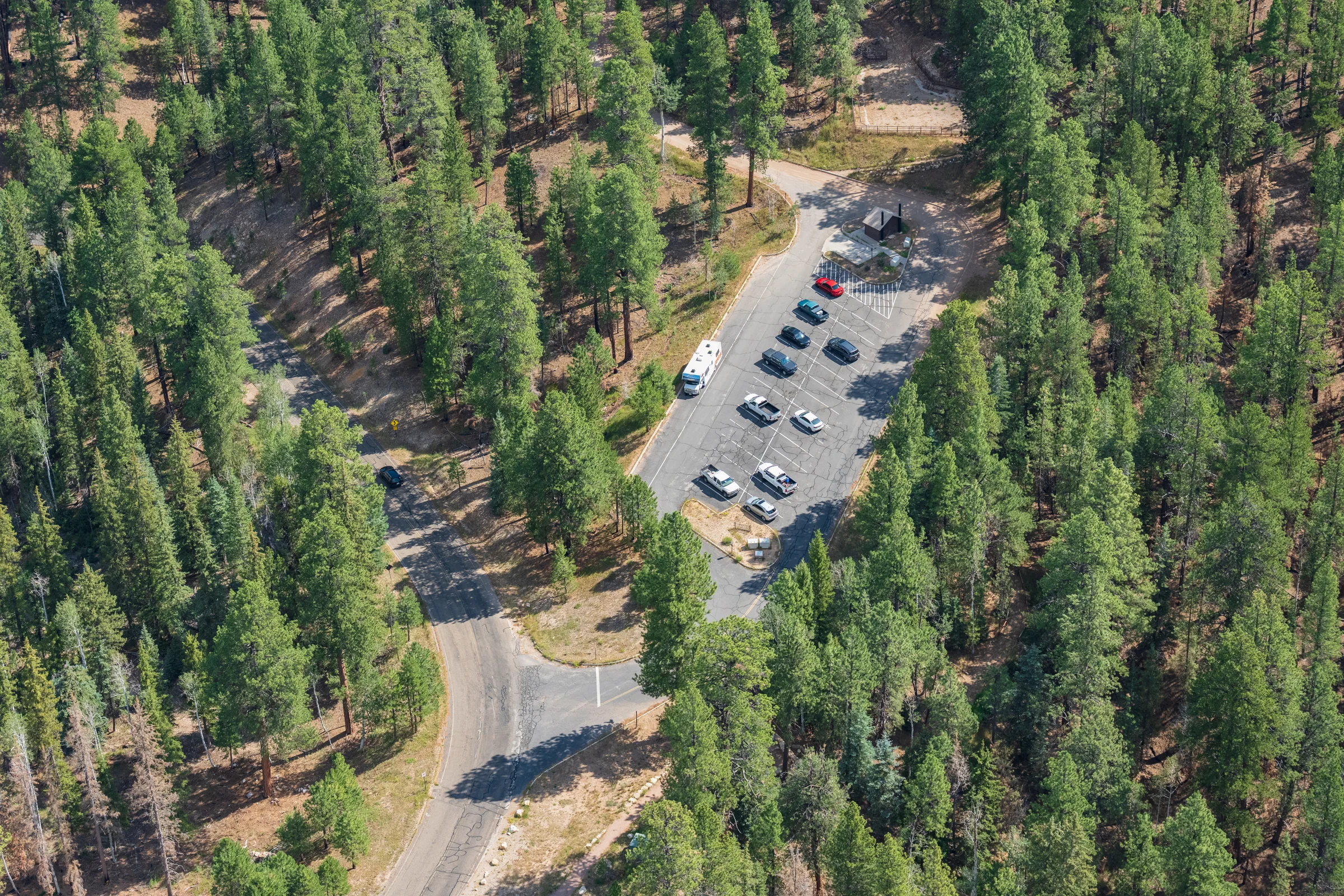
Developed does not mean identical
A developed campground usually has numbered sites, a road or formal access path, and shared facilities. Some have flush toilets, showers, and hookups; others have only a vault toilet and no water. Read the individual listing and current alerts.
This is often the best first format because boundaries, rules, and exits are easier to understand. It still requires shelter, a sleep system, food storage, and preparation for weather.
Walk-in sites add a carry
At a walk-in site, the vehicle remains in a shared lot or spur while you carry equipment to camp. The distance may be a few dozen yards or much farther, sometimes over uneven terrain. Ask for distance, grade, cart availability, and whether the route is illuminated.
Pack fewer loose items and use bags or bins one person can manage. A wheeled cooler may be useless on steps or sand; a giant tent may be awkward through a narrow path. Do not leave valuables visible in the vehicle.
Backcountry campgrounds and backpacking sites
A designated backcountry site is reached without the car and may require a separate permit. It can have a marked pad, privy, food locker, or none of these. The party must carry the shelter, sleep system, food, water plan, navigation, and emergency margin.
Designation does not guarantee current water or an easy approach. Confirm trail conditions, elevation, fire rules, food-storage rules, and how the permit assigns sites.
Dispersed camping
Dispersed camping generally means camping outside a developed campground where a land manager permits it. It does not mean anywhere on public-looking land. Boundaries, road access, stay limits, closures, fire rules, waste rules, and required distances vary by agency and unit.
Use an existing durable site when allowed, avoid creating new tracks, and choose a location from which a beginner can easily leave. With no host, tap, toilet, or trash service, the group must solve those needs legally and responsibly.
Choose by responsibility, not romance
Beginner default: Learn shelter, sleep, cooking, and campground routines at a developed site before adding remote access and uncertain facilities.
| Format | Usually easiest about | Adds responsibility for |
|---|---|---|
| Drive-up campground | Access and facilities | Neighbors, reservations, site rules |
| Walk-in | Quieter setting | Carrying and parking security |
| Designated backcountry | Known legal camp area | Route, permits, self-sufficiency |
| Dispersed | Flexibility | Legality, site choice, water, waste, exit |
What responsibility changes with the format
A developed campground defines where to park and sleep, but it does not remove the need to check weather, food storage, fire restrictions, or water status. A walk-in site adds a transport problem: the listed distance may be short yet include stairs, sand, or a hill. Pack in containers one person can actually carry, and confirm whether carts are available rather than planning around a photo.
Dispersed camping is not simply a campground without a fee. The visitor may need to identify which parcels permit camping, where motor vehicles are allowed, how long stays may last, which surfaces are appropriate, and what human-waste method is required. Cellular service, toilets, trash service, tables, and treated water may all be absent. Rules can differ across adjoining agencies and change during closures.
A reserved backcountry site can be more controlled than dispersed roadside camping even though it requires a hike. It may assign a specific pad, food locker, or toilet, while the route adds navigation, water, and load-management demands. Choose by the complete chain of responsibilities rather than assuming that ‘remote’ and ‘advanced’ always mean the same thing.
Beginners curious about dispersed camping can first practice at a primitive designated site managed by a known agency. Confirm the road is suitable for the vehicle, arrive in daylight, carry all water, and retain an exit margin. Do not publish or follow informal coordinates without checking land ownership and current restrictions; a popular-looking pullout can be private property, restoration area, or an unsafe road shoulder.
- Identify the land manager before relying on any rule
- Confirm vehicle access and turnaround space
- Plan water and waste without services
- Use established durable sites where required
- Leave when access or jurisdiction is uncertain
Use a progression instead of a leap
A practical progression might move from a staffed drive-up campground to a primitive designated site, then to a legal dispersed area only after water, sanitation, navigation, weather, and vehicle-access skills are reliable. The steps are not status levels. Many experienced campers prefer developed sites because accessibility, family logistics, or relaxation matters more than remoteness.
At every stage, check who manages the land on the exact date. Boundaries can be hard to see, seasonal gates can close, and fire orders can cover one jurisdiction but not the next. Download the official map and rules, retain a legal backup, and leave no cache or marker to claim a spot. If finding a site requires damaging vegetation or crowding another party, continue only where travel and camping are allowed.
- Progress by added responsibility
- Respect land boundaries and seasonal closures
- Never create or claim an unauthorized site
Sources and further reading
Rules and conditions change. Use these references, then confirm details with the land manager or manufacturer responsible for your trip.