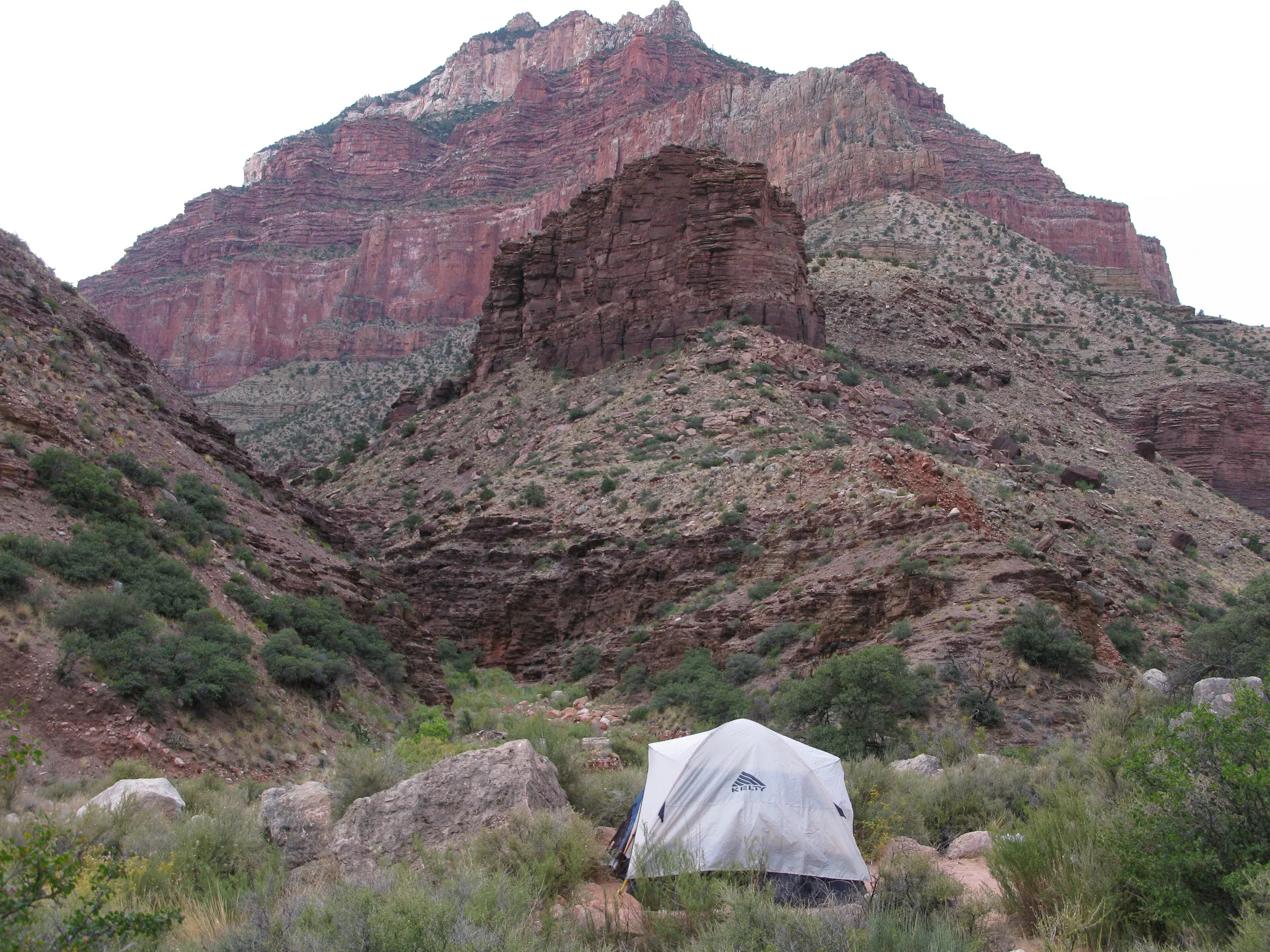
Translate capacity into floor space
Tent person ratings describe close sleeping capacity, not comfort or standard bed sizes. Compare the floor length and width with actual pads, sleepers, a child, or a dog. Then decide whether gear belongs inside, in a vestibule, or in the vehicle.
A taller peak does not guarantee usable standing room; wall angle and pole structure shape the space. Mark candidate dimensions on a floor at home.
Match structure to conditions
For ordinary three-season campground use, look for a full-coverage or appropriately protective rainfly, bathtub-style floor, adequate ventilation, secure pole connections, and usable guy points. Check the manufacturer’s intended season and setup instructions.
No recreational tent is a substitute for substantial shelter in severe weather. Avoid exposed and hazard-tree sites, use a point forecast, and leave when conditions exceed the tent or your experience.
Prefer a setup you can repeat
Color-coded poles, clips, clearly oriented fly corners, and a modest number of parts reduce confusion. Freestanding designs are often easier to position but still need staking. Cabin tents offer space but can present more surface to wind and may be awkward for one person.
Pitch every candidate or watch the official complete setup before purchase. Confirm that replacement poles, clips, and a repair path exist.
Compare useful categories
The best category depends on party, vehicle, site, and weather. Avoid universal rankings that ignore those variables.
| Style | Useful for | Tradeoff |
|---|---|---|
| Simple dome | Small groups, broad conditions | Less standing room |
| Tunnel/extended dome | More vestibule or sleeping space | Pitch orientation matters |
| Cabin | Family living space in fair weather | Bulk and wind exposure |
| Instant/pop-up | Fast fair-weather setup | Packed size, repair complexity |
Shortlist without invented testing
Photography requirement: Any product image on this article must show the actual named model and carry valid usage rights; a generated tent image cannot represent a real product.
- Verify current floor, peak height, packed size, weight, materials, and included parts
- Read warranty and replacement-part information
- Check independent long-term reports without adopting their experience as Camp Newb’s
- Choose a seller with a workable return policy
- Practice and inspect before the return window closes
Build a shortlist for the people using it
A couple using two wide pads should tape those exact rectangles on the floor before comparing tent dimensions. Add space needed for a child, dog, medical device, or accessible transfer. Door placement matters when one sleeper must climb over another; two doors may justify added cost for some pairs. Vestibule area can keep muddy shoes outside the living space, but food should still follow campground storage rules.
For a family arriving by car, packed weight may matter less than pole complexity, packed length, and whether one adult can pitch while supervising children. A tall cabin can provide welcome standing room in calm weather yet present more wall area to wind. A simple dome often sheds weather more predictably but may feel cramped during a rainy afternoon. There is no useful winner without the actual group and conditions.
Check what the listed package includes. Some tents omit a footprint, extra guylines, repair splint, or enough stakes for every point; those omissions affect usable cost and weight. Read the complete manual, warranty, fabric care, and replacement-parts availability. A bargain becomes expensive if a proprietary pole cannot be repaired after one season.
Used equipment deserves a full pitch. Inspect seam tape, coating odor or tackiness, mesh holes, zipper travel, pole cracks, ferrules, clips, buckles, and stake loops. Test with controlled water only if appropriate and dry it fully. Walk away from undisclosed mildew, widespread delamination, missing structural parts, or a size that forces the group beyond the prepared site.
- Measure actual pads and occupants
- Compare doors and usable wall shape
- Price every required component
- Confirm one-person setup if needed
- Pitch and inspect any used tent before paying
Make the final purchase reversible
Buy early enough to pitch within the return period. Use clean ground, avoid removing tags beyond the retailer’s policy until fit is confirmed, and photograph any defect. Have every intended sleeper lie down with pads and normal bedtime equipment. Check whether doors can open without soaking the interior and whether vents are operable from a realistic position.
A tent’s service life depends on use and care, not a universal number of seasons. Protect it from prolonged ultraviolet exposure, flames, sparks, harsh cleaners, and storage while damp. Follow pole and zipper care instructions. A modest well-maintained tent suited to common trips can be better value than a premium tent repeatedly used outside its design.
- Test within the return window
- Evaluate with real sleepers and pads
- Maintain fabric, poles, and zippers
Sources and further reading
Rules and conditions change. Use these references, then confirm details with the land manager or manufacturer responsible for your trip.