A phone can carry the reservation, route, weather screenshot, camera, clock, field guide, flashlight, and the number you need when something goes wrong. It can also spend half its battery looking for a tower that is not there and become a cold black rectangle before dinner.
Give it fewer jobs. Prepare the information offline, decide what deserves power, and carry the backup the trip requires. The phone remains useful because it is not pretending to be the whole safety system.
Two days before: download the actual trip
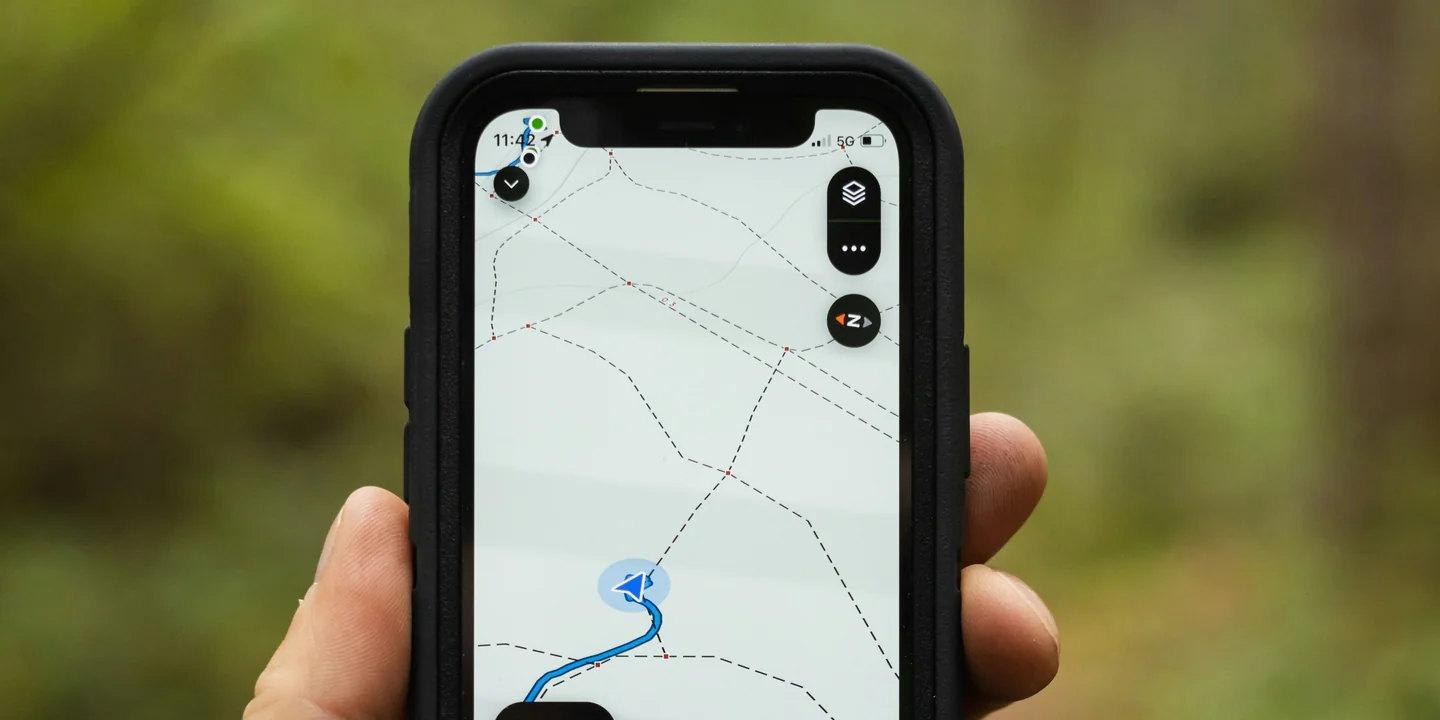
Save the campground confirmation, gate instructions, permit, route description, emergency contacts, and the National Weather Service point forecast and the official route closure page. Download the map area in the app you will use and verify that the trail or road you need is included. Some general map apps limit offline walking directions or omit trail detail; test the exact workflow in airplane mode.
Save a second copy of the essential address and route as a screenshot or PDF. Share the trip plan with someone who is not going. A reservation stored only inside an app waiting to sign in is not offline.
Open the offline-map settings and check the expiration or update date. Some apps remove or age out downloads unless they reconnect. Include the trailhead road, detours, alternative exits, and enough surrounding terrain to recognize a wrong drainage.
At home: prove the map works without a network
Turn on airplane mode, disable Wi-Fi, open the map, find the trailhead, zoom to usable detail, and locate the return route. Check that the phone's location can still place you on the downloaded map. Then close and reopen the app. This takes two minutes and catches an astonishing number of maps that were viewed but never downloaded.
Carry a paper map and compass, or a second prepared device and know how to use it. The phone can be dropped, soaked, overheated, frozen, or simply exhausted.
Give the battery a weekend budget
Start fully charged. Use airplane mode where there is no practical service, lower screen brightness, shorten screen-on time, and close navigation after confirming the route rather than leaving the display awake. Download music, books, and podcasts before departure. Keep the phone insulated from cold and shaded from direct heat.
Check the percentage at the same two moments each day—after breakfast and before dinner—and adjust while there is still margin. If half the planned time has passed and more than half the battery is gone, stop optional video, repeated map browsing, and background uploads first. Do not discover the trend only when the low-power warning appears.
Bring a charged power bank and the correct short cable. Test that combination at home; ownership of three cables does not imply any of them fits. Battery labels describe capacity under test conditions, not guaranteed full phone charges, so leave margin rather than planning to reach the car at zero.
A cold-shut-down phone may still hold charge. Move it to a dry inner pocket, warm it gradually with body heat, and try again; never place it on a stove, heater, or hot-water bottle. Size the power bank from a test: measure one representative day's battery use, multiply by trip days, then add at least 30% margin for cold, conversion loss, and emergencies. Verify the actual bank and cable can deliver that energy before departure.
Separate camp access from personal access
Make the booking number, site number, vehicle details, and shared route available to every person who may need it without requiring one person's face, fingerprint, or memory. Send the documents in advance or keep a printed copy. Do not share a full device passcode just to let someone find the campground address.
Set emergency contacts and medical information using Medical ID and Emergency SOS. Keep the device locked and physically secured. At night, put it in one predictable pocket rather than under a sleeping bag where it becomes both overheated and lost.
Use communication as a plan, not a promise
Check where coverage is expected, but assume gaps. Write down the nearest staffed location and the route back to reliable service. If the trip warrants satellite communication, learn that device before departure and make sure everyone in the group understands what it can and cannot do.
Carry water, light, shelter, navigation skill, and a check-in plan alongside the phone. It is one capable tool. Preserve it for the jobs only it can do, and the weekend will end with charge to spare instead of a screen-time autopsy.
Some current phones offer built-in satellite emergency messaging or limited off-grid check-ins, but availability changes with model, software, country, subscription or service terms, sky view, and setup. Practice the supported demo before the trip and keep the independent trip plan.
Sources and further reading
Image credits
Lead image: Greg Rosenke / Unsplash · Unsplash License.