Camp kitchens expand to fill every bin offered to them. Add a second skillet and it demands tongs. Add a griddle and suddenly breakfast needs batter bowls, a ladle, oil, syrup, and a diplomatic plan for washing all of it. The smaller kitchen begins somewhere else: with the meals.
Write the menu, circle every cooking action, and pack the least equipment that can perform those actions comfortably. A kitchen for pasta, oatmeal, sandwiches, and coffee is a different object from a kitchen for pancakes and grilled vegetables. Neither needs to impersonate the other.
Use one box, with four smaller neighborhoods
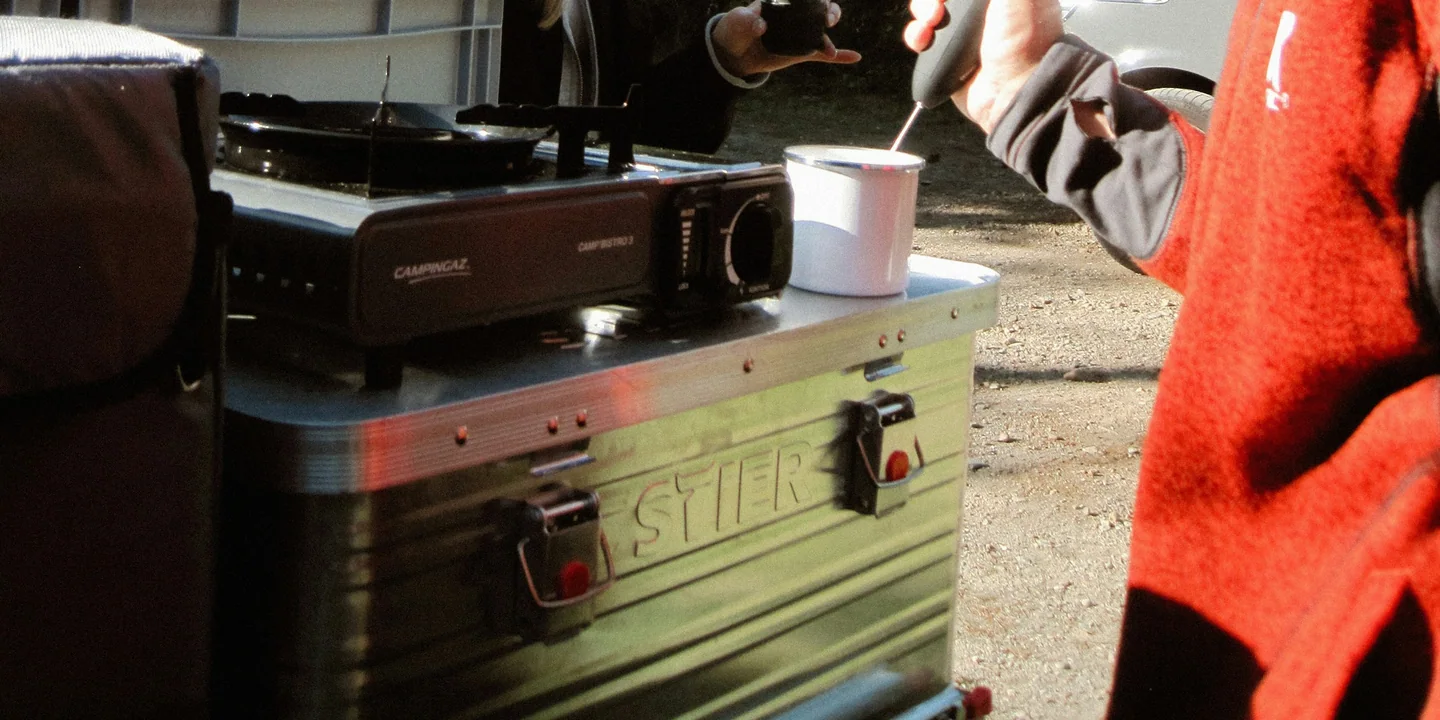
Put cooking tools together, eating pieces together, cleaning pieces together, and tiny essentials together. The last group—lighter, opener, salt, oil, and coffee—benefits from a small zip pouch because each item is capable of vanishing beneath a pot.
Keep the stove and fuel beside the box if their shape makes the box awkward. Do not store fuel in cookware with food residue, and follow the fuel maker's transport instructions. Put a paper inventory inside the lid. Refill soap, matches, and trash bags after the trip rather than trusting the next version of you.
Never leave a fuel canister in a hot closed vehicle or direct sun. Transport and store it as the label requires, with the valve protected and away from food and ignition.
Water and cleanup are part of the kitchen
A distant campground tap turns a one-liter bottle into a repetitive chore. Bring a refillable camp container that is comfortable to carry when full. Set up a hand-washing point before food prep and keep raw ingredients separated from ready-to-eat food.
Use the campground's dishwashing system when one is provided. Otherwise, follow its wastewater rule. Scrape plates clean, use a small amount of soap, strain food scraps into trash, and dispose of the water only at least 200 feet from water, camp, and trail after straining food scraps into trash. “Biodegradable” does not make soap appropriate for a stream.
- Scrape: remove food into trash before water touches the dish.
- Wash: use a small basin of hot, soapy water.
- Rinse: use a second basin of clean water; sanitize when the campground or food-safety plan requires it.
- Strain and dispose: pack out scraps and follow the official route or campground page's graywater instruction. If no local rule provides a distance and scattering is allowed, 200 feet from water, camp, and trail is a common planning reference.
Set the stove on a stable, cleared surface outside the tent and away from traffic. When cooking ends, cool and pack the kitchen, dry-food bag, cooler, trash, soap, and every other scented item in the locker, locked hard-sided vehicle, or approved container required by that site.
What can stay home
Leave duplicate knives, a full spice cabinet, nesting cookware nobody needs, breakable serving pieces, and every appliance without a named meal. Leave the Dutch oven when nobody has practiced managing coals. Leave the giant lantern off the prep surface; headlamps and a small area light make better kitchen tools.
After dinner, note which object performed no job. Keep safety and repair items that were merely fortunate not to be needed, but question duplicate cooking tools. A good small kitchen is not austere. It has exactly enough room to make the food you planned without moving six objects to find the spoon.
Sources and further reading
Image credits
Lead image: Anna / Unsplash · Unsplash License.