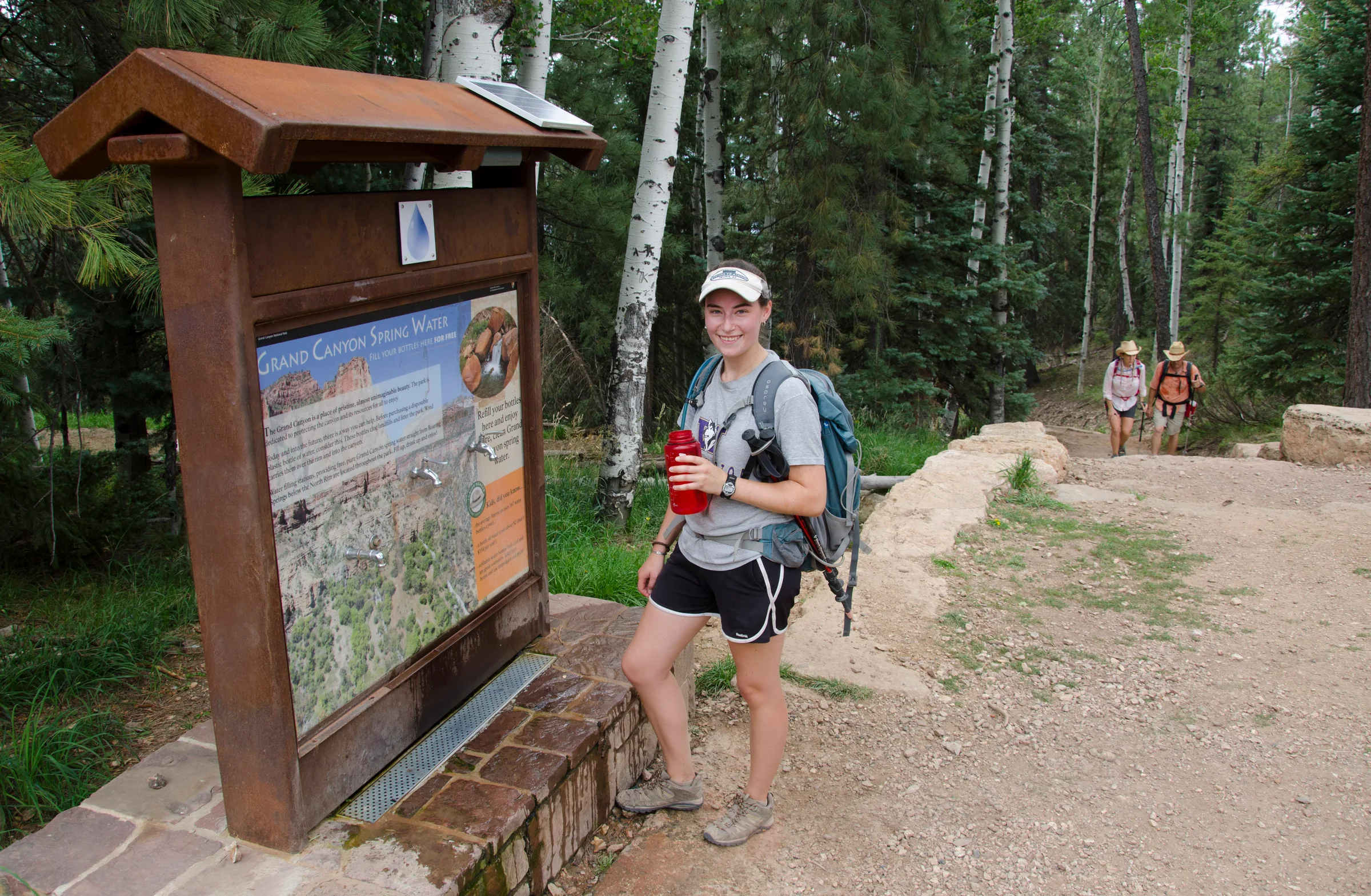
Start with the water source
Treatment does not make every source usable. Avoid water with obvious chemical contamination, harmful algal bloom warnings, mine drainage, or other hazards that a typical filter is not designed to remove; seek another source and follow local advisories.
Verify that mapped sources are currently flowing. Carry enough water to reach the next confirmed source plus margin, because a blue line on a map is not a promise.
Know the treatment categories
| Method | Often addresses | Important limits |
|---|---|---|
| Microfilter | Protozoa and bacteria, model-dependent | Many do not remove viruses or chemicals |
| Purifier | Broader microbes, model-dependent | Flow, maintenance, and claims vary |
| Chemical disinfectant | Microbes named on label | Contact time, temperature, and clarity matter |
| Boiling | Microbial hazards | Does not remove chemicals; needs fuel |
Read the device, not the category name
Check the manufacturer’s organism claims, pore or test standard, compatible water, flow rate, cleaning procedure, service life, and replacement cue. A product called a filter and one called a purifier are not interchangeable merely because both have pumps.
If local guidance calls for a combination method, follow it in the specified order. Do not invent a shorter contact time or assume a carbon element removes every chemical contaminant.
Prevent clean-side contamination
- Mark dirty and clean vessels clearly.
- Keep dirty hoses and hands away from clean bottle threads and outlets.
- Backflush or clean exactly as the manufacturer directs.
- Protect hollow-fiber units from freezing; hidden freeze damage may not be visible.
- Carry the approved backup method and know how to use it.
A conservative water plan
Before leaving, record each expected source, alternate source, carrying capacity, treatment method, and the official page checked. At the trailhead, change the plan if water reports, closures, or conditions differ.
Treatment advice is conditional, not a safety guarantee. For international travel, disaster contamination, saltwater, chemical spills, or an immunocompromised traveler, use situation-specific public-health guidance.
Match the method to the suspected hazard
Most portable backpacking filters are designed around particles and specified microorganisms, but capabilities vary. Check the manufacturer’s current claims for pore size, organisms addressed, flow conditions, lifespan, and whether a purifier stage is included. Chemical contaminants, toxins, salt, fuel, and mining pollution may not be removed by an ordinary filter. When those hazards are plausible, choose another source or follow authoritative local guidance.
Boiling and chemical disinfection also have conditions and limits. Water temperature, cloudiness, contact time, elevation, and organism affect instructions. Do not combine half of one method with half of another and assume the result is complete. Record the official recommendation for the destination and carry the exact instructions for the chosen product.
Run a complete water plan
Mark reliable, seasonal, and uncertain sources separately using current land-manager information. Calculate the longest dry segment, expected consumption, cooking needs, pet needs, and reserve, then confirm that containers can carry it. A blue line on a map is not a promise of flow or safe access; drought, freezing, closures, and contamination events can change conditions.
At each source, collect from the clearest practical location without trampling banks or entering dangerous current. Keep untreated equipment physically separate from bottle threads, clean caps, and hands. Establish a group vocabulary—‘dirty bag,’ ‘treated bottle’—so nobody casually swaps them.
Prevent common treatment failures
Follow backflushing, priming, storage, and replacement instructions. Protect hollow-fiber filters from freezing; damage may be invisible, and the manufacturer should decide whether a suspected frozen unit remains usable. Pre-filter silty water when recommended and stop if cracks, lost seals, unusual flow, or chemical exposure put performance in doubt.
Carry an independent backup method that matches the destination and that the group knows how to use. If the primary system fails and the backup cannot address the likely hazard, turn around or move to verified water. Dehydration pressure is not a reason to make confident claims about an unknown source.
Worked example: the source is missing
A route description mentions a seasonal creek four miles from the trailhead, but the current ranger report cannot confirm flow. The hikers calculate that reaching it with empty bottles would leave no safe return margin. They carry enough water for the full out-and-back plus cooking and reserve, shorten the route to fit that weight, and leave a longer itinerary for a season with verified sources. The filter remains useful but is not counted as water.
At the dry creek, they do not dig in mud, drink from a stagnant wildlife pool, or continue toward another unverified mark. They turn around at the written time. This example shows why capacity, source confidence, and route choice belong in the same plan: treatment equipment can address some contaminants in available water, but it cannot create water where none exists.
Sources and further reading
Rules and conditions change. Use these references, then confirm details with the land manager or manufacturer responsible for your trip.