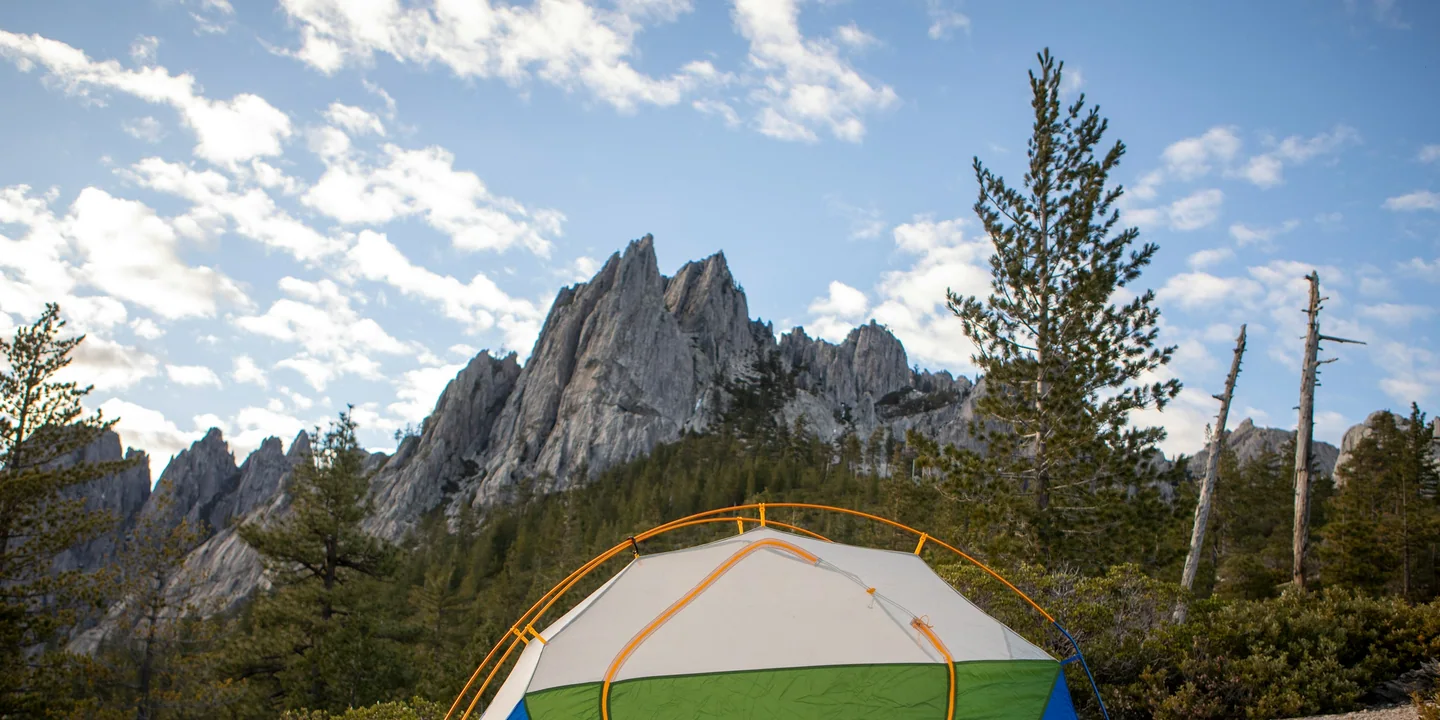
A tent pad can be designated, level, and deeply uncooperative. Packed gravel refuses ordinary stakes. A rocky site offers six inches of soil and then one enormous fact. Sand accepts a stake politely and returns it as soon as the wind arrives.
Do not solve the problem by expanding into vegetation, digging a platform, or clearing the ground into a new site. Stay on the designated or already durable surface, protect the tent, and change the anchor—not the landscape.
Begin with the least alteration
Walk the existing pad and remove only loose hazards that campground rules allow you to move. Do not scrape away organic litter, pry embedded rocks, trench around the tent, or hammer roots. Rotate the tent within the pad to find the smoothest footprint and keep doors away from runoff, traffic, and obvious low spots.
Use the footprint specified for the tent or a footprint that does not extend past the tent floor. Exposed groundsheet collects rain and sends it under the tent. Check the floor with a bare hand before setting the shelter down; a small sharp point matters more than the general ugliness of the surface.
If the durable pad is smaller than the shelter, do not expand into vegetation. Rotate within the boundary, use a smaller shelter that fits the marked pad, or choose another site. A vestibule can extend over the durable edge only when the official site map keeps that edge inside your site and the shelter can pitch safely.
On hard ground, stop before the stake bends
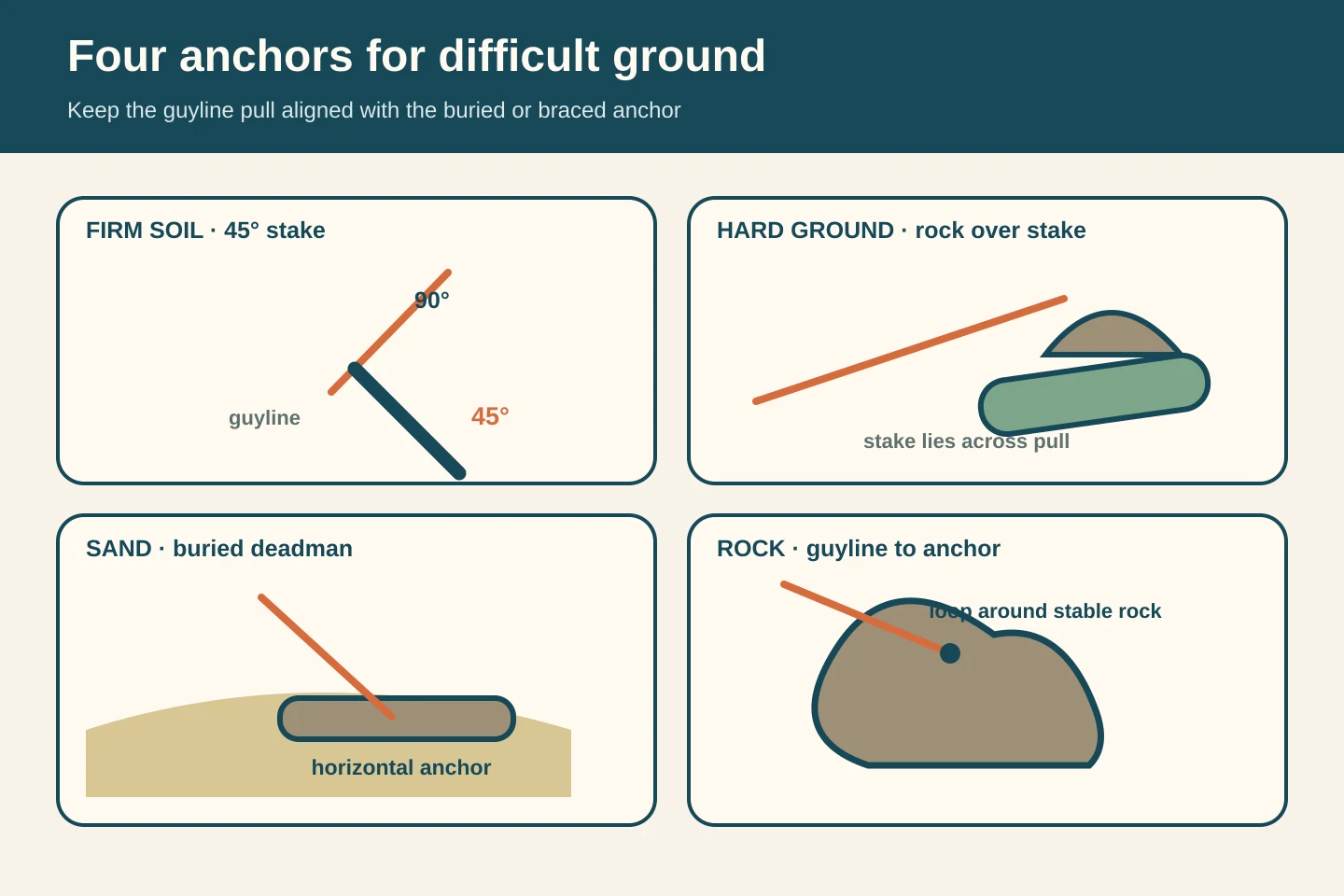
Probe for a seam in the soil and drive a suitable stake at about 45 degrees, with its top leaning away from the tent. Keep the guyline roughly perpendicular to the stake. If the stake stops, move it; hammering harder bends stakes and weakens the anchor.
After every corner is set, tension the fly in small rounds rather than pulling one line tight at once. Push each anchor sideways with a boot, then pull the guyline in the direction wind will load it. A stake that rotates during this test needs a new position or a different anchor.
On rock, separate abrasion from anchoring
Protect the floor with a footprint that does not extend past the tent floor. For anchoring, brace a horizontal stake with a stable loose rock or loop the guyline around a rock that cannot roll. Do not move constructed features or disturb vegetation.
Pad every cord that crosses a sharp edge with a folded scrap of fabric, and inspect it again after the fly takes tension. Use separate rocks for separate lines so one shifting anchor cannot release an entire side of the tent.
In sand, use more surface area
Bury a sand stake, filled sack, or smooth stick horizontally as a deadman, perpendicular to the pull. Pack sand firmly above it and test each line before trusting the shelter. Remove every buried anchor and refill the hole when leaving.
Lengthen the guylines so the pull stays low instead of lifting the anchor. Recheck the windward side after gusts or rain because loose sand can settle. If the surface will not hold, move to firmer durable ground instead of digging a larger excavation.
A surface-specific kit is small
| Surface | Useful anchor | Do not do |
|---|---|---|
| Firm soil | Y- or V-stake sized for the shelter | Hammer through rock |
| Compacted gravel | Approved hardened nail stake or rock-over-stake method | Trench or break the pad |
| Rock slab / shallow soil | Extra cord and several permitted stable rocks | Tie to fragile plants or built features |
| Loose sand | Wide sand stake or retrievable deadman | Trust a short narrow stake |
| Consolidated snow | Snow stake or retrievable deadman listed for the route | Leave buried cord, bags, or anchors |
Practice the exact method before the trip and count every stake and line during departure. A difficult pad is an equipment problem, not permission to manufacture a better campsite.
Sources and further reading
Image credits
Lead image: Mazin Omron / Unsplash · Unsplash License.