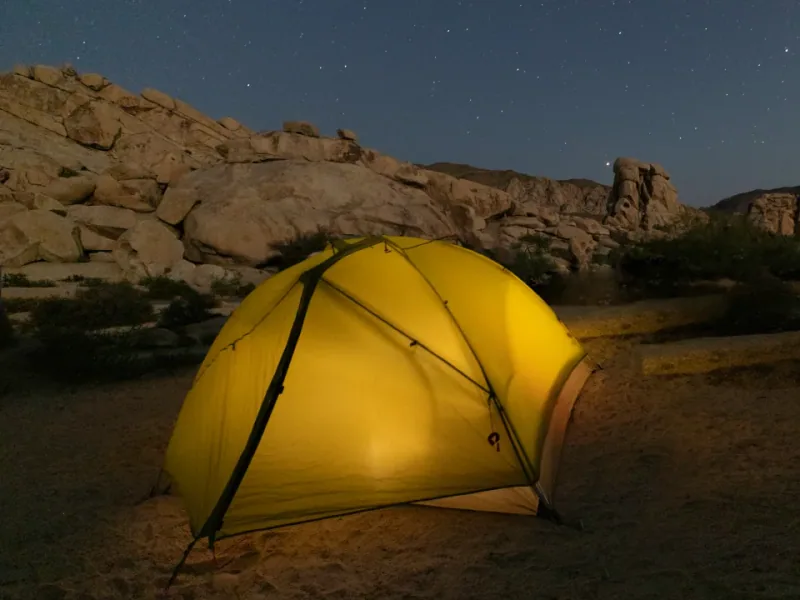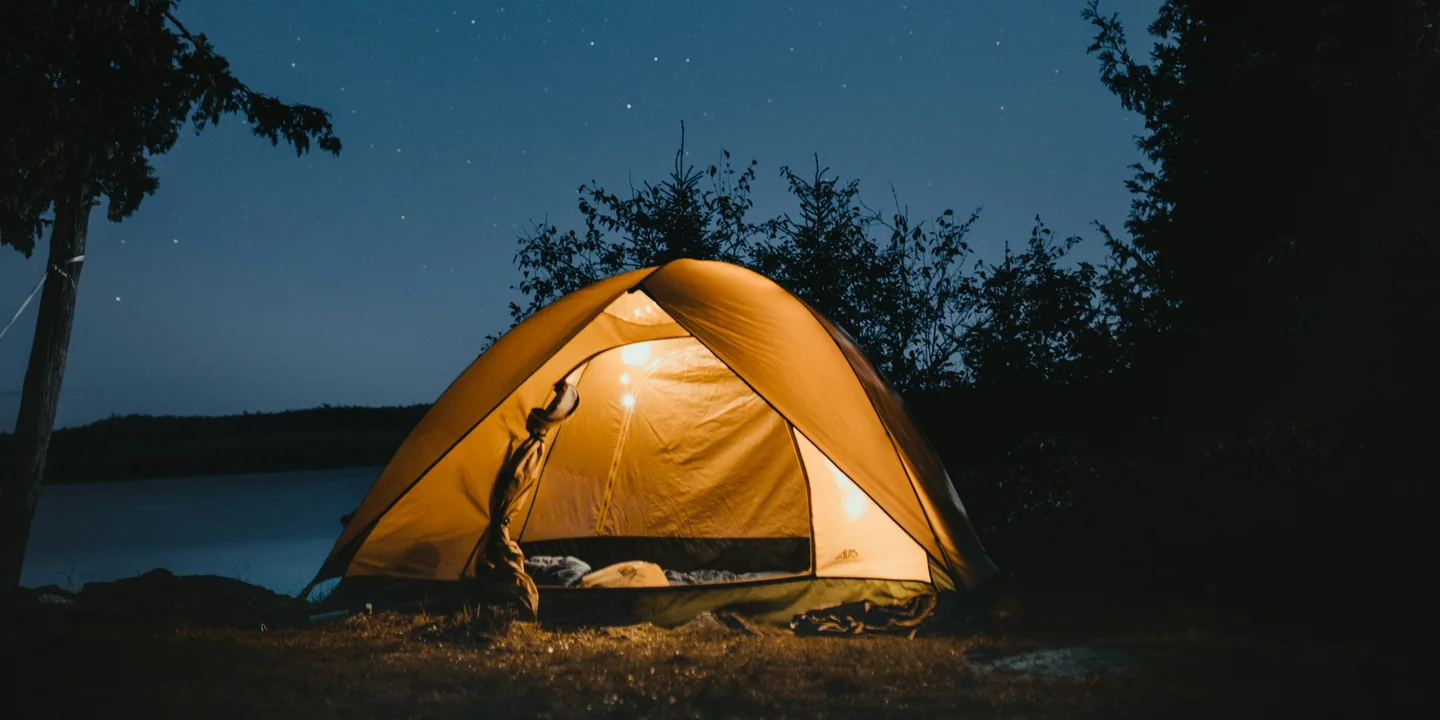
A campsite without a fire is not a campsite missing its center. It just needs a different center. Dinner comes from the stove or arrives ready to eat. Light goes where hands and feet need it. Warmth comes from clothing and the sleep system. Conversation no longer has to compete with smoke choosing one person's face.
This is useful when fires are prohibited, wood is unavailable, the evening is short, or nobody wants to spend the final hour drowning coals. Check the current rule first. A fire ban may still allow a particular gas stove in a cleared area, or it may restrict every flame-producing device. The local order decides.
Choose dinner that does not depend on wood
Use the camp-stove type listed on the campground fire page for a one-pot meal, or choose a no-cook dinner when flame devices are also restricted. Pasta, couscous, soup, quesadillas, and boil-only meals all work without a campfire. A cold spread of sturdy bread, hummus, cheese kept safely chilled, vegetables, fruit, and something crisp can feel like dinner rather than contingency food.
Bring the complete method: stove, compatible fuel, ignition, stable surface, pot, lid, utensil, and enough water. Do not assume a campground fire grate is a practical stove stand. If the current restriction permits a gas appliance, follow the required clearance and supervision exactly.
Keep cheese, hummus, and other perishables at 40°F or below; discard them after more than two hours above 40°F, or one hour when the air exceeds 90°F. A propane or catalytic heater is also fuel-burning equipment, not a safe shortcut for warming a tent.
Use three small pools of light
Each person needs a headlamp. Add one low, warm area light for the table and one small light or reflective marker for the path to the tent or toilet. That is usually enough. A single bright lantern in the center creates hard shadows beyond it and turns every neighboring site into an audience.
Aim lights down, use the lowest practical setting, and switch to red light when tasks allow. Put the toilet route and guylines in memory before dark. Light should solve movement and work, then get out of the way of the sky.
Begin with charged batteries, use the lowest practical output, and keep a spare light and power source warm and reachable. Cold reduces available battery capacity. Candle lanterns and other open flames may be covered by a fire order even when no wood fire is planned; read the order rather than assuming the device is exempt.
Dress for the temperature you expected the fire to fix
A campfire warms only the side facing it and does not repair an inadequate sleep system. Put on the warm layer before becoming chilled, change out of damp clothing, eat, and keep the sleeping bag or quilt dry. A hat, dry socks, and an insulated sit pad do more reliable work than orbiting a smoky ring.
For a cold forecast, choose equipment and a site that are suitable without a fire. Wood heat is never the backup for bedding that cannot handle the night.
Eat before bed, make a hot drink on the permitted outdoor stove, and use a leak-tested bottle filled with hot—not boiling—water inside an insulating cover. None replaces a sleep system rated with margin for the overnight low.
Give the evening one shape
After cleanup and required food storage, choose one activity rather than unpacking an entertainment department. Take a short dusk walk on an open signed route, play a compact game, read aloud, compare the day's photographs, sketch the site, or make a hot drink if the current fire page lists the stove as open. Without a bright fire, stargazing starts earlier and night sounds become more noticeable.
Put one chair or sit pad where the group can face each other rather than an empty fire ring. The physical center matters more than the flame. Keep the table light low enough that eyes can adjust between tasks and the sky, and carry the activity into the tent only if quiet hours and the people sharing it agree.
A simple schedule works: dinner at six, cleanup and food storage by seven, a walk or game until eight, then quieter light near the tent. Stop before the activity turns into noise that belongs to the whole campground.
The departure is the quiet advantage
There is no firewood to buy, no half-burned log to manage, no ash to cool, and no ring to inspect for trash. The stove cools, fuel is secured, and the kitchen closes. In dry country or during a busy departure morning, that is not a consolation prize. It is a cleaner plan.
If fires are permitted another time and you want one, have one deliberately. The practical lesson is that food, light, warmth, and company were separate jobs all along.
Sources and further reading
Image credits
Lead image: Josh Hild / Unsplash · Unsplash License.